Casinos Without GamStop Payment Methods and Regulatory Risks
 Available in GB
Casinos without GamStop promise a route to play beyond Britain’s national online exclusion scheme, but a payment route is not a protection: in Great Britain, offshore sites are not licensed by the UK Gambling Commission, and British safeguards and complaint routes do not apply. The money may move quickly; getting it back is another matter.

As of 18 November 2026, the sums surrounding this market tell two stories. The Gambling Commission estimated that 2.5% of people who had gambled online in the previous four weeks had engaged with illegal gambling websites, while 94.4% of the whole population showed no indication of using one. The small proportion is not a certificate of safety for the sites it describes. Nor is every offshore site identical: payment rules and licensing claims vary, and some operators publish more detail than others. My view is that a payment logo is the least interesting part of the transaction. The rules attached to the account, the destination of a withdrawal and the authority able to hear a dispute matter more. This guide looks at those mechanics, sets them beside British-licensed standards, and explains what can—and cannot—be checked. If gambling is causing harm, GamCare’s National Gambling Helpline is free on 0808 8020 133, 24 hours a day, every day; Wales also has 0808 2819 265.
A casino without GamStop is outside the British system
The phrase casino without gamstop tends to make the exclusion scheme sound like a switch fitted to individual websites. It is not. GamStop Online blocks access to online gambling companies licensed in Great Britain that must participate in the scheme. The requirement has applied to online operators since 31 March 2020 under the Gambling Commission’s Licence Conditions and Codes of Practice. The scheme’s name is often typed “gamestop”; the correct name is GamStop.
Sites without a UK Gambling Commission licence are not connected to GamStop. The sheet’s account of this offshore point is marked unconfirmed, but it is consistent with the scheme’s stated scope: the block applies to participating British-licensed operators, not every gambling service on the internet. That does not make offshore gambling lawful to offer in Great Britain. The Commission says commercial gambling services cannot be offered to consumers here without its licence, even where an operator holds a licence elsewhere. The legal offence is directed at providing unlicensed gambling facilities, not at an adult customer simply placing a bet.
The practical difference is stark. A UK licence brings British rules on identity checks, fair terms, customer funds, complaints and safer gambling. Those protections do not travel with a payment card to an offshore operator. A foreign licence, where valid, is not a UK licence; its regulator cannot give the Gambling Commission’s protections or British dispute route. Nor does offshore access provide a legitimate way round self-exclusion. A GamStop exclusion cannot be cancelled during its chosen term; it remains in place afterwards until the person contacts GamStop to remove it.
What the numbers say about casino sites without GamStop
The Gambling Commission’s analysis published 5 November 2026, covering April 2025 to April 2026, estimated that 2.5% of people who had gambled online in the previous four weeks had engaged with illegal gambling websites. Across the whole population, including non-gamblers, the estimate was 0.6% in the previous four weeks and a further 0.4% in the previous 12 months; 94.4% showed no indication of use. These are survey estimates, not a headcount of every site or a measure of the money lost there.
Another figure needs a warning label. H2 Gambling Capital estimated that £16.6 billion was staked with illegal gambling operators in the UK in 2025, compared with about £5 billion in 2019. That is an industry estimate, and “staked” is not the same as lost or earned. Treating it as money taken from players would be bad arithmetic. The Commission separately identified 586 illegal gambling websites accessible to GB consumers in September 2026. A moving list of domains is a poor proxy for the quality of any one operator, but it does show why a footer badge alone proves little.
The useful benchmark for this page is not a rival offshore market statistic. It is how British-licensed payouts behave. Commission data for June to September 2024 covered 44.2 million withdrawals at large online operators: 96.3% cleared automatically, 3.5% within 24 hours and 0.1% took up to 48 hours. It is a strong operational benchmark, not a guaranteed deadline for every customer. The Commission sets no fixed maximum number of days for every withdrawal, and lawful verification or anti-money-laundering duties can delay a case. Still, an operator should explain a delay; “manual review” is not a spell that makes silence reassuring.
How online casinos without GamStop handle payments
The important difference between payment methods is often what they can prove, not how futuristic they sound. Cards, e-wallets, bank transfers and crypto each leave different records and have different fees or settlement times. None can repair a weak operator’s terms or create British regulatory oversight where none exists.
| Method | Concrete timing or cost | What the figure does—and does not—mean |
|---|---|---|
| British-licensed online withdrawals | In June–September 2024, 96.3% of 44.2 million withdrawals cleared automatically | A useful benchmark from large operators, not a promise for every withdrawal |
| Bitcoin | Average target of 10 minutes per block; six confirmations can take longer | Network confirmation is variable, and the operator may add its own processing time |
| Litecoin | Average block interval of 2.5 minutes; six confirmations average about 15 minutes | An average, not a deadline; only about 55.43% of modelled six-confirmation spans finish within 15 minutes |
| Skrill bank withdrawal | 2.80%, with a minimum EUR 3.50 | The wallet’s fee to withdraw to a bank; currency conversion may add a separate 4.49% fee |
| Neteller bank withdrawal | 2.80%, with a minimum USD 3.50 | A fee schedule, not a casino payout promise; conversion may add 4.49% |
| MiFinity crypto withdrawal | 1.8% | Listed wallet fee; applicable network and operator conditions remain separate |
A casino may accept a deposit through one channel and insist that the withdrawal returns by another. That may be a fraud-control measure, or simply a condition buried in terms; the distinction should be stated before money is sent. E-wallets are not cost-free just because the casino’s deposit screen says “free”. Skrill and Neteller, for example, charge the listed bank-withdrawal fees above, and both may apply foreign-exchange costs. Crypto avoids a bank transfer, not uncertainty: a bitcoin block is not guaranteed within ten minutes, and six confirmations can take an hour or more.
Pay by phone bill casinos without gamstop are a phrase that suggests convenience while disguising the question of what exactly the payment provider allows. The supplied facts give no reliable phone-bill fees, limits or withdrawal mechanics, so no such figures belong here. A payment option for deposits is not evidence that winnings can be withdrawn through the same route. The same caution applies to live dealer casinos without gamstop: the game format tells nothing about the payment rules, licence or recourse.
The licence and its seals
A licence is the hinge on which the protections turn. The first check is simple: a British-licensed site should appear on the Gambling Commission’s public register, with the activities and domain names matching the site being used. The Commission’s advice is to check that register rather than accept a logo at face value.
Offshore jurisdictions have different systems. Curaçao’s National Ordinance on Games of Chance took effect on 24 December 2024, replacing the old master-licence and sub-licence model with direct licensing by the Curaçao Gaming Authority. The legacy orange certificates ended on 15 October 2025. A historic “/JAZ” number or old seal is not proof of a current licence. A valid Certificate of Operation seal should redirect to the CGA’s verification page and show the same domain as the casino; the CGA says a mismatched domain means the site is unauthorised or fraudulent. Its online portal transition, announced in October 2026, complicates digital verification, so a non-functioning seal cannot be waved away as a minor design quirk.
Anjouan publishes a licence verification framework with unique licence numbers and QR codes, but the authority’s own claims do not settle every question about oversight. An ABC News investigation in December 2025 reported serious disputes over the authority and licensing administrator. That is a reason to distinguish a verifiable certificate from the strength and reach of the regulator behind it. Costa Rica, by contrast, has no comprehensive gambling licensing regime; a so-called data-processing licence is not a gambling licence in the strict legal sense.
British protections are a meaningful standard, not a perfect one. The Gambling Commission still receives around 2,000 complaints a year about withdrawal delays, and withdrawals remain its leading complaint topic. Yet licensed operators face fair-terms rules, a required complaints process and access to approved ADR when a dispute remains unresolved after eight weeks. Offshore, the local regulator’s complaint procedure and terms may be all that stands between a customer and an unanswered email.
What the withdrawal clause really does
A withdrawal is not one event. It is a request, an operator approval, a payment instruction and, sometimes, a bank or blockchain settlement. The provider’s processing speed and the casino’s decision time are separate clocks. A “near-instant” network does not make a casino approve an account instantly.
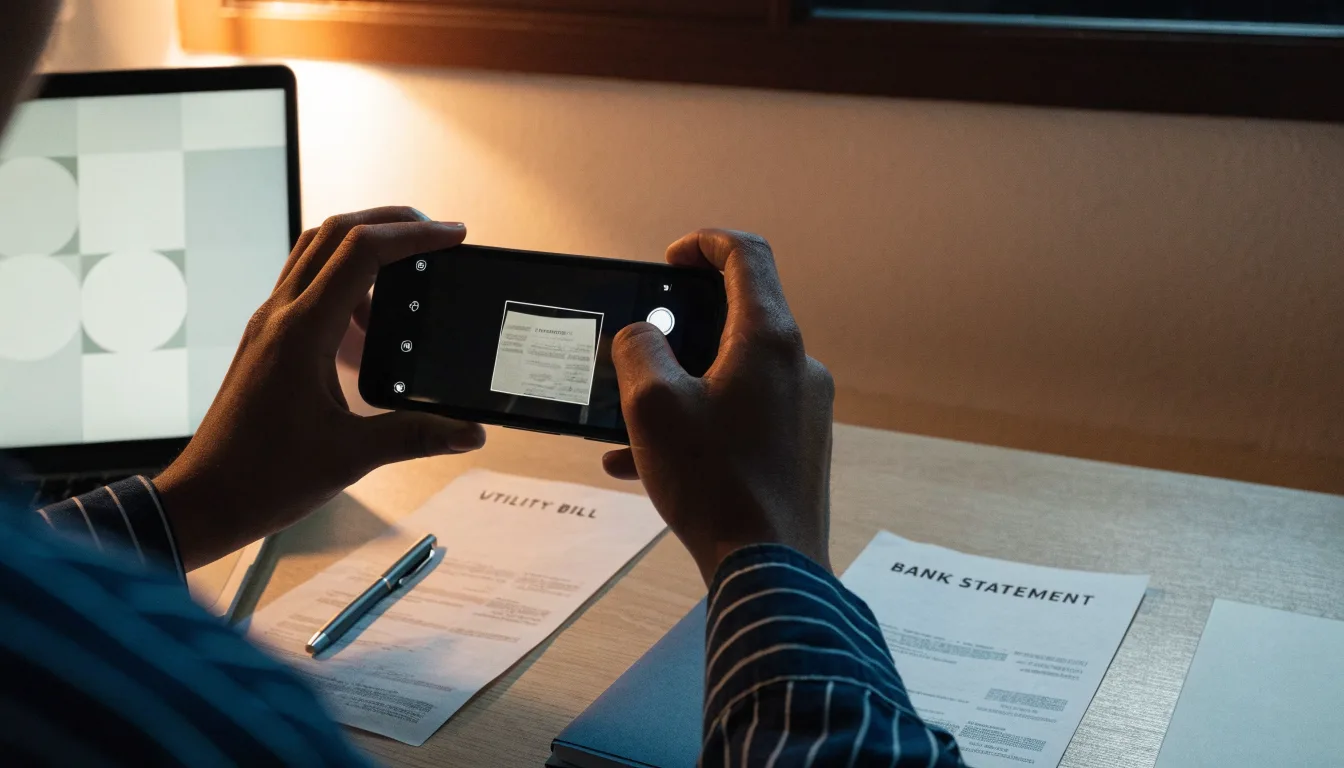
British-licensed operators cannot make a withdrawal request the moment to demand information they could reasonably have asked for earlier. They may still need information at that point to meet another legal obligation, such as anti-money-laundering rules. The Gambling Commission also bans reverse withdrawals: since 31 October 2021, a remote operator must not let a customer cancel a withdrawal request and put those funds back into play. That rule is sensible. A cash-out button should not double as a slot-machine lever.
Offshore terms may instead permit manual approval, daily withdrawal caps, staged payouts, extra identity checks or a delay after a requested withdrawal. Some such checks can have a legitimate fraud-prevention purpose; their presence is not proof of misconduct. But open-ended discretion, a one-withdrawal-at-a-time clause, or a right to void winnings without clear grounds deserves scrutiny. British Commission guidance treats withdrawal caps on a customer’s deposit balance and terms giving the operator sole discretion to withhold winnings as unfair. Those rules do not bind an unlicensed offshore site in the same way.
Identity checks should not be postponed as a surprise. British operators must establish identity before permitting gambling, and terms should explain what documents may be needed. The Commission says more than a quarter of complaints reaching its Contact Centre concern identity verification, including cases where documents are requested only at withdrawal. A request for a passport or bank statement is not automatically improper; unexplained demands after a long delay, repeated requests for the same material, or no clear route to appeal are the warning signs.
Five signs an operator deserves scrutiny
The domain matches the regulator’s record
Check the regulator’s public register or verification certificate, not a logo pasted into the footer. Confirm the exact domain and the entity named in the terms. A mismatched CGA domain, a dead verification link or an old /JAZ badge should not be treated as proof of current licensing.
Withdrawal rules are visible before deposit
Read the cashier and full terms for minimums, maximums, fees, processing stages and the payment route used for cash-outs. Check whether a limit applies per request or per day, whether staged payments are allowed, and whether a stated timeframe means approval or arrival. A rule appearing only after a win is a poor rule.
Identity checks have a stated trigger
Look for a clear list of acceptable documents, when they may be requested and where they are submitted securely. A serious operator explains its verification process before a deposit. “Send whatever we ask for” is not a process; it is a blank cheque written in the operator’s favour.
The payment fee is itemised
Check the casino’s own fee terms and the payment provider’s current schedule separately. Note the currency, conversion charge and whether the provider charges on withdrawal. A wallet’s 2.80% bank-transfer fee is not necessarily the casino’s only cost, and a deposit method says nothing by itself about withdrawal availability.
A real complaint route is named
Find the operator’s internal complaints address, any regulator’s complaint process and the named ADR provider, then check whether that body actually accepts disputes about the site. British-licensed operators must offer access to an approved ADR entity if an internal complaint is not resolved within eight weeks. An offshore promise of “24/7 support” is not an independent adjudicator.
A practical way to assess the payment terms
- Identify the legal operator. Find the company name in the terms, then compare it with the regulator’s register. This shows whether the badge belongs to the business and domain actually offering the games.
- Separate deposit from withdrawal methods. Read both cashier pages. This matters because a site can accept one method for deposits while restricting or redirecting withdrawals.
- Write down every stated cost. Include provider fees, currency conversion and any minimum or maximum. A low-cost deposit can become an expensive exit.
- Map the withdrawal stages. Distinguish pending approval, manual review and payment-network settlement. It makes vague “instant payout” language easier to judge against the actual terms.
- Check identity and source-of-funds clauses. Note what documents may be requested and when. Legitimate checks can be required, but clarity before depositing is a basic test of fair dealing.
- Locate the complaint route before relying on it. Confirm the named regulator and dispute body, and whether the process covers the operator. A customer-service inbox and an independent adjudicator are not the same thing.
These are ordinary information checks, not a method for evading a block or bypassing identity controls. GamStop exclusion holds for its full chosen term and then stays in place until the person contacts GamStop to remove it. An offshore site is not an alternative safeguard or a lawful workaround.
Frequently asked questions
Are casinos without GamStop legal in Great Britain?
The Gambling Commission says commercial gambling services cannot be offered to consumers in Great Britain without a Commission licence, even if the operator has a licence elsewhere. Section 33 of the Gambling Act 2005 concerns the provision of gambling facilities without the required licence. That offence is directed at the operator; it does not mean that an adult customer placing a bet commits the same offence.
Does a foreign licence protect customers in the UK?
A foreign licence may mean an operator is subject to that jurisdiction’s rules, but it is not a UK Gambling Commission licence. British protections, including UKGC oversight and the British licensed-operator complaints framework, do not apply simply because a site displays a foreign regulator’s seal. The sensible question is what can be independently verified, and what authority can act if the operator fails to pay.
Are withdrawals from offshore casino sites fast?
There is no single offshore payout speed in the supplied evidence. A payment network can settle quickly while the operator holds a request for manual approval or identity checks. For comparison, Gambling Commission data for June to September 2024 found 96.3% of withdrawals at large licensed operators cleared automatically, but that is not a guarantee for any individual withdrawal or an offshore benchmark.
Can a casino ask for identity documents when withdrawing?
Identity checks can be required for legal and fraud-prevention reasons, but British rules say an operator must not make a withdrawal request the trigger for information it could reasonably have requested earlier. The Commission says identity-verification concerns account for over a quarter of complaints reaching its Contact Centre. A clear explanation, secure submission route and timely response matter more than the mere fact documents are requested.
Do pay by phone bill casinos without GamStop allow phone-bill withdrawals?
The phrase describes a possible deposit route, not proof that the same route can pay winnings back. Phone-bill payment fees, limits and withdrawal arrangements are not established by the facts available for this guide. The operator’s cashier terms and the payment provider’s own terms would need to set those out clearly; absent that detail, a deposit logo answers very little.
What help is available if gambling causes harm?
GamCare’s National Gambling Helpline is free on 0808 8020 133, open 24 hours a day, every day of the year; the same number is available through live chat and WhatsApp. In Wales, 0808 2819 265 is also listed. The NHS provides specialist gambling treatment services, and Gamblers Anonymous England, Wales & Ulster can be reached on 0330 094 0322.
The payment route is not the protection
The method tells how money might move; the licence and terms determine what happens when it does not. GamCare’s free National Gambling Helpline is 0808 8020 133, available around the clock. And the British benchmark remains plain: 96.3% of withdrawals at large licensed operators cleared automatically in June to September 2024.
Casinos Not on GamStop – Casino Not on GamStop
Content created by the «Casino Not on GamStop» team